
Kamukunji, one of Kenya’s most iconic sites for political resistance, played a central role in the fight for multi-party democracy and civil freedoms.Today, true to its name—assembly—Kamukunji remains densely populated.
In Kamukunji, Sexual and Gender-Based Violence (SGBV) festers in silence. Hidden behind corrugated iron walls and masked by poverty, substance abuse, and patriarchal norms, the epidemic is not new.But the way stakeholders are beginning to confront it is.
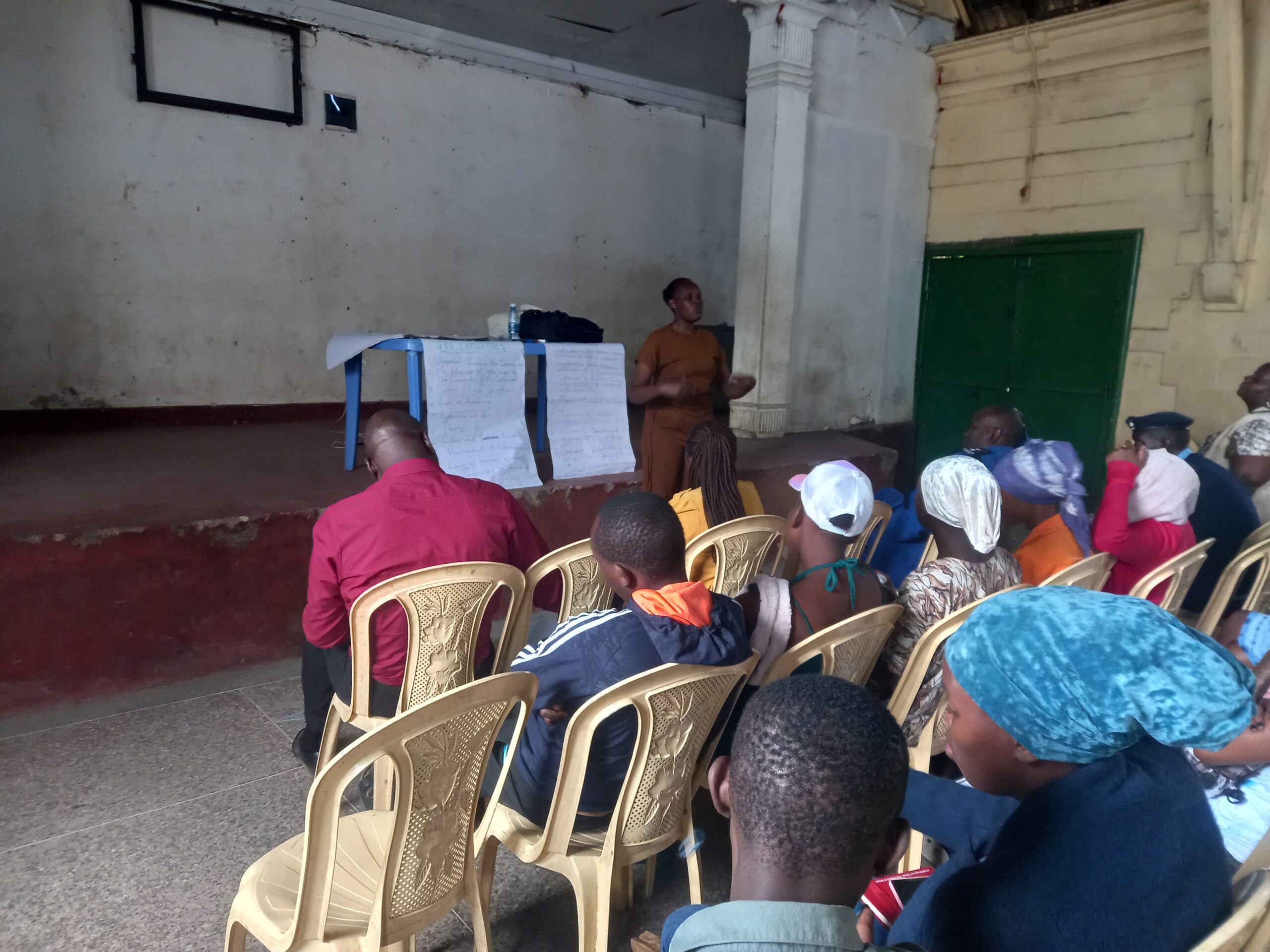
On 6 August, a cross-section of community actors gathered at Pumwani Social Hall. Chiefs, police officers, representatives from the children’s and youth offices, local Community Based Organisations (CBOs), and Members of Parliament’s constituency office gathered at Pumwani Social Hall—to confront the issue in what many hope is a turning point.
Led by Ms. Wangeshi Muturi, Kamukunji’s GBV focal person, the meeting was more than symbolic, it was a gathering of inter-agency cooperation in a space where survivors are often isolated, legal pathways opaque, and justice elusive.
With over 357,000 residents, Kamukunji suffers high levels of defilement—sexual abuse involving minors—among the most common yet least reported crimes. Here, gender violence thrives not just in private, but also through public neglect.While campaigns have helped reduce teenage pregnancies and HIV rates, survivors—especially children, women with disabilities, and those economically vulnerable—are still silenced by shame, fear, and impunity.
Reporting rape can be more traumatic than enduring it. The system is designed to forget.“Bribery in the justice system,” one participant said, “is not a bug. It’s the system.” Police intimidate victims or ignore them. Health workers lack training and resources. Parents—many struggling with addiction or poverty—sometimes protect perpetrators instead of their children.
Against this backdrop, familiar development buzzwords—sensitisation, capacity building, empowerment—feel empty. Coordination is weak, funding unreliable, and public outrage rarely reaches courtrooms. The link between community pain and institutional action remains broken.The presence of youth officers and groups like the Kamukunji Community Empowerment Initiative (KCEI) hints at change. There’s growing agreement that GBV prevention must be local, inclusive, and data-driven.
Proposals included training child protection ambassadors, expanding mental health services, and offering financial support to survivors—actions that treat GBV as both personal trauma and systemic failure.Kenya’s sexual violence laws are strong on paper. But in informal settlements, implementation is stalled by corruption, bureaucracy, and exhaustion. Kamukunji’s children cannot wait for Parliament to act. What’s needed now is political will and public pressure.
The meeting ended with a prayer. But the real work, as we all surely know, will require more than faith—it will demand policy change, persistence, and political cost.
#ENDS
By KCEI Team