
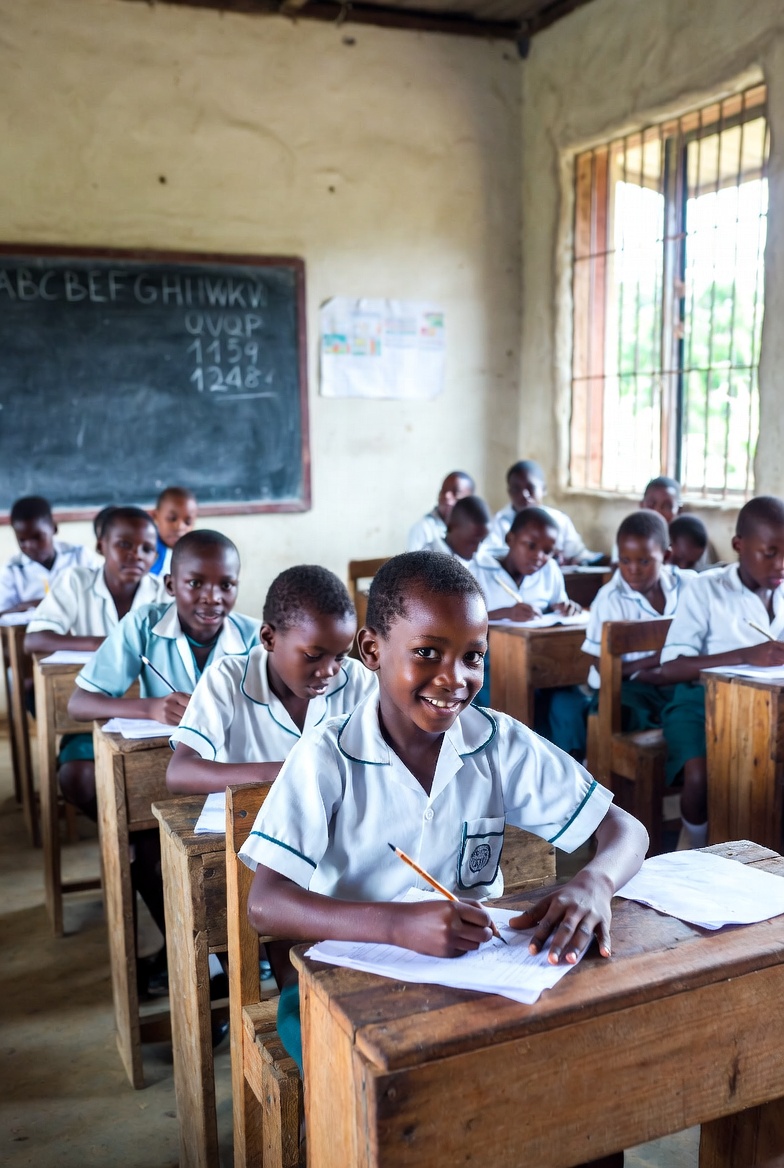
Education was once Kenya’s most reliable engine of opportunity. It opened doors, narrowed social divides, and offered generations a route beyond inherited disadvantage. Today, that promise is eroding. A new culture is emerging—one that risks undoing decades of educational gains and entrenching inequality as a permanent feature of national life.
Kenya’s Constitution is unambiguous. Under Articles 43 and 53, education is a guaranteed right, owed to every child regardless of circumstance. Yet in practice, schooling is steadily drifting from a public obligation toward a market commodity, less a right than a privilege purchased by those who can afford it.
This shift has not occurred in isolation. It has been driven by corruption, weak regulation, political interference, and the expanding role of public–private partnerships that place profit logic at the heart of social services. As private provision grows and public oversight weakens, access to quality education increasingly depends on household income rather than state responsibility. The result is a layered system that mirrors, and deepens, Kenya’s social and economic inequalities.
The consequences are visible in Kamukunji, one of Nairobi’s oldest and most densely populated urban areas. At new Kamukunji Primary School, a rehabilitation project launched in March 2025 remains incomplete more than a year later. Instead of permanent structures, pupils continue to learn in temporary iron-sheet classrooms—only five in total—despite rising enrolment. Severe space constraints have forced Grade 1 and Grade 2 learners to share classrooms, undermining the basic conditions required for effective learning.
The surrounding environment compounds the challenge. A major drainage channel runs alongside the school playground, often overflowing and clogged with waste. Poor drainage and uncollected garbage expose pupils to health risks, while shrinking play areas limit safe recreational space. These are not peripheral concerns; they directly affect attendance, concentration, and overall wellbeing.
Staffing shortages further strain the system. Kamukunji Primary, like many public schools across the country, operates with too few teachers to meet growing demand. Overstretched educators manage overcrowded classrooms with minimal resources, eroding teaching quality and morale. This is not an isolated failure, but a nationwide one.
Beyond infrastructure, financial exclusion continues to push children out of school—even those who meet academic requirements. Following the recent Grade 10 placements, several students in Kamukunji remain at home simply because their families cannot afford school-related costs. One 14-year-old girl, who met expectations based on her grades, has been unable to enrol due to financial constraints. Her case is emblematic of a system that rewards performance in theory but penalises poverty in practice.
At the secondary level, the consequences are even starker. A Form Four student sent home in January over outstanding school fees of Ksh 22,000 has yet to return to class months later. With national examinations approaching, each missed week widens the gap between promise and possibility. For many such students, prolonged absence quietly becomes permanent dropout.
These lived realities sit uneasily alongside Kenya’s fiscal picture. Government revenue for the 2025–2026 financial year reached approximately Ksh 2.5 trillion, with Ksh 701 billion—about 28.1%—allocated to education, exceeding international benchmarks. On paper, the commitment appears robust.
In practice, however, allocation has not translated into access or quality. A significant share of education funding is absorbed by recurrent expenditure, particularly salaries, leaving little room for classrooms, sanitation facilities, laboratories, or learning materials.
The government’s plan to construct only 100 new classrooms nationwide illustrates the widening gap between policy commitments and demographic reality. In high-density areas such as Kamukunji, this gap is measured in overcrowded rooms and combined grades.
At the same time, Kenya’s rising debt burden continues to constrain public spending. Billions are directed toward debt servicing under austerity conditions, shrinking fiscal space for social investment. Each shilling prioritised for repayment is a shilling unavailable for hiring teachers, completing stalled school projects, or equipping classrooms. The costs of this trade-off are borne not by creditors, but by children.
Governance failures compound the crisis. Recent audits revealing ghost schools and fictitious enrolments underscore how capitation funds intended for vulnerable learners are diverted through entrenched corruption. Resources meant to support public education are siphoned off, further weakening already strained institutions and eroding public trust.
Even within nominally “free” public education, hidden costs continue to rise. Families are asked to provide basic supplies—from printing paper to learning materials—expenses that disproportionately burden low-income households. For many in Kamukunji and similar communities, these costs mark the line between schooling and exclusion.
If current trends persist, education will cease to function as Kenya’s great equaliser. A system designed to underpin economic growth, democratic participation, and social mobility risks becoming a mechanism for reproducing inequality across generations. The long-term costs, to productivity, cohesion, and governance, will far outweigh any short-term fiscal restraint.
Reversing this trajectory requires more than headline allocations. The state must prioritise accountability, complete stalled infrastructure projects, address teacher shortages, and ensure that public funds reach classrooms rather than leak through corruption. Public education must be strengthened, not sidelined, if constitutional guarantees are to retain meaning.
Education must remain free, inclusive, and of quality, not as charity, but as obligation. When children who meet academic expectations remain at home for lack of fees, the failure is not theirs. It is the state’s. And when a nation neglects its public schools, it undermines the very foundations of equality, democracy, and hope.
By Whitney Atieno